by Derek Bishton | 24th April 2019 | May
25 May 1963
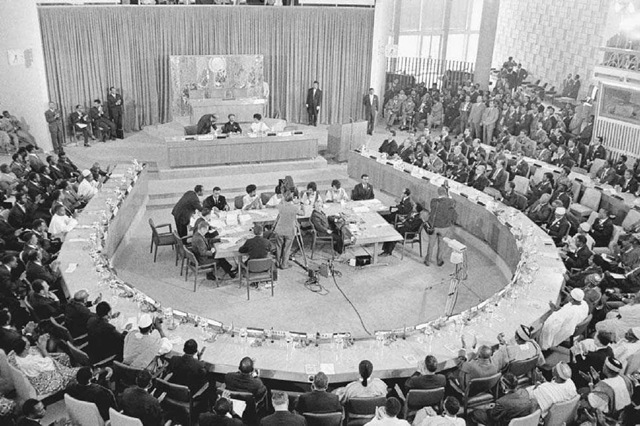
THE Organization for African Unity (OAU) was formally established on May 25, 1963 with a permanent headquarters in Addis Ababa, Ethiopia. HIM Haile Selassie, Emperor of Ethiopia, was selected as the first President.
Read more

by Derek Bishton | 24th April 2019 | May
12 May 1789
WILLIAM WILBERFORCE’s involvement in the abolition movement was undoubtedly motivated by his desire to put his evangelical Christian principles into action. Along with fellow members of the Clapham Sect – a group of social reformers who attended Holy Trinity Church on Clapham Common – he was repulsed by the trade in human beings, the greed and avarice of the traders and the moral bankruptcy of the planter-owners. It may come as a surprise, then, to find that his speech introducing his Bill to outlaw the slave trade is virtually free of moralising, Christian or otherwise. Instead, he takes a forensic, fact-based approach to dismantle the arguments of his opponents.
Read more

by Derek Bishton | 24th April 2019 | March
01 March 1738
WHEN THE English forces landed in Jamaica in May 1655, they quickly routed the small Spanish garrison. However, they held off enforcing the surrender for a few days thus allowing most of the Spanish to escape to Cuba. Significantly, the Spaniards also freed their slaves and left them behind in the mountains with vague instructions to harass the English until troops for the anticipated re-conquest could be raised. These freed slaves, later known as Maroons, quickly organised themselves into a highly efficient fighting force. For more than 80 years they waged a devastating guerrilla war against the English.
Read more

by Derek Bishton | 24th April 2019 | January
11 January 1816
MATTHEW LEWIS is chiefly remembered as the author of the sensational Gothic novel The Monk, published in 1796. He was, however, a slave-owner and inherited two large plantations in Jamaica which he visited twice, in 1815 and 1817. His anecdotal record, Journal of a West Indian Proprietor, is full of vivid descriptions of plantation life – albeit from the perspective of a slave-owner.
Read more
by Derek Bishton | 24th April 2019 | December
27 December 1831
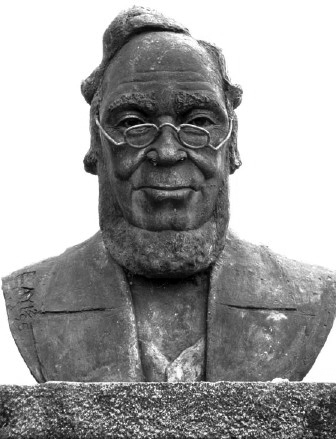
REV HOPE MASTERTON WADDELL was an Irish-born missionary who served in Jamaica and then Calabar, Nigeria. He arrived in the Caribbean when the struggle against slavery was reaching crisis point. Sam Sharpe, an enslaved man who was a literate and well respected deacon in charge of a missionary chapel in Montego Bay, was agitating for complete emancipation. At Christmas 1831, Sharpe – using the network of Native Baptist churches – organised a rebellion in the mistaken belief that freedom had already been granted by the British Parliament but was being withheld by the planters. His plan was to withhold labour at a time when the cane needed to be cut, but events quickly spiralled out of control, as Masterton Waddell recounts.
Read more

by Derek Bishton | 23rd April 2019 | October
18 October 1968
IN THIS excerpt from a speech given in Montréal following his banning by the Jamaican authorities a few days earlier, Walter Rodney, the Guyanese-born academic and activist, warns against being seduced by the myth of a harmonious multi-racial society. He describes how he got real knowledge and understanding from Rastafari, the least regarded, most despised section of society. Finally, Rodney stresses the importance of the black intellectual attaching himself to the activity of the black masses.
Read more

by Derek Bishton | 23rd April 2019 | October
14 October 1492
THIRTY FIVE DAYS after leaving Gomera in the Canary Islands, on his first voyage to the New World, Christopher Columbus sighted an island which the native Taino people called Guanahani, and which he renamed San Salvador (Holy Saviour). He landed on October 12 and then sailed around the island. This is an excerpt from his log.
Read more

by Derek Bishton | 22nd April 2019 | November, Featured Post
02 November 1930
ADDISON E SOUTHARD, United States Minister to Ethiopia, was commissioned by National Geographic to cover the former Ras Tafari succeeding to the world’s oldest continuously sovereign throne. His report appeared in the edition of June 1931 and was a major source of information for the emerging Rastafari movement in Jamaica.
Read more

by Derek Bishton | 21st March 2019 | May
30 May 1797
IN THIS excerpt from Mungo Park’s Travels in the Interior of Africa he describes how a sick slave is traded for a young woman who suddenly finds herself attached to the slave coffle
Read more
by Derek Bishton | 21st March 2019 | May
05 May 1980
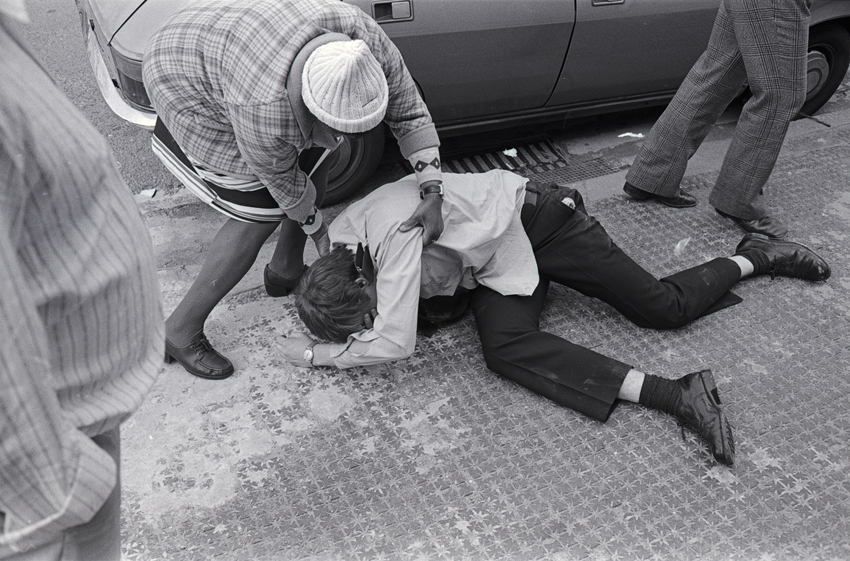
ON THE Spring Bank Holiday 1980 (May Day) John Reardon and I were working at the Sidelines office in Grove Lane. There were a few people on the corner opposite where the local betting shop was doing good business. Suddenly a police panda car screamed to a halt outside the shop and two policemen attempted to arrest a young black man. A crowd quickly gathered. We were watching from the upstairs window of our building. The crowd surrounded the policemen who were holding their suspect and moments later the two police lay on the floor and the crowd melted away.
Read more
by Derek Bishton | 21st March 2019 | April
19 April 1797
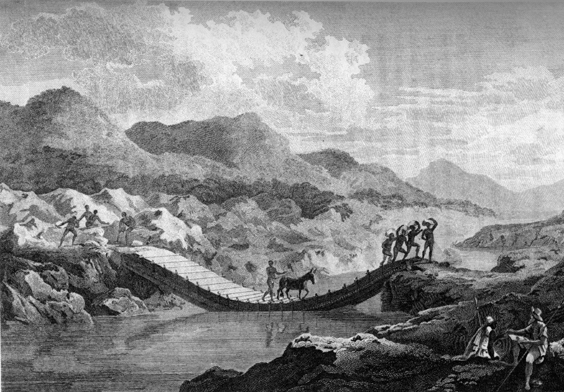
IN THIS excerpt from Travels in the Interior of Africa, Mungo Park describes the composition of a slave coffle, which includes merchants, free men, their wives and domestic slaves, a schoolmaster, thirty five slaves for sale, and six Jilli keas – singing men – who served to keep spirits up as well as entertaining hosts along the route.
Read more
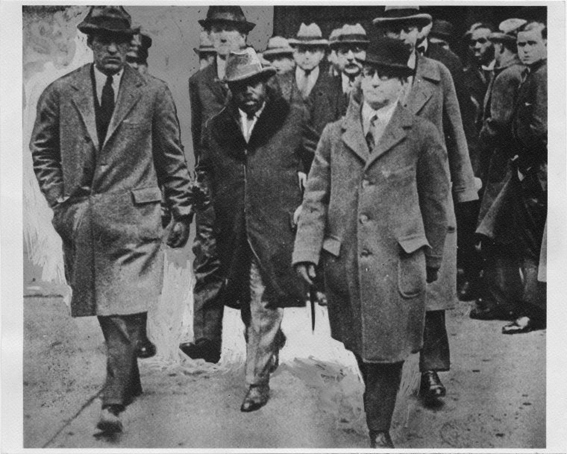
by Derek Bishton | 24th April 2019 | June
17 June 1923
IN JUNE 1923, Marcus Garvey was convicted on federal charges of mail fraud in connection with the sale of stock in the Universal Negro Improvement Association’s Black Star Line. Sentenced to five years imprisonment, Garvey delivered his last address while on bail pending an appeal before a crowd at Liberty Hall in New York City. It is a wonderful piece of oratory and ends with this defiant assertion: “I repeat that if they think they can stamp out the souls of 400,000,000 black men, they make a tremendous and terrible mistake. We are no longer dogs; we are no longer peons; we are no longer serfs—we are men.”
Read more