by Derek Bishton | 26th January 2020 | February
06 February 1981
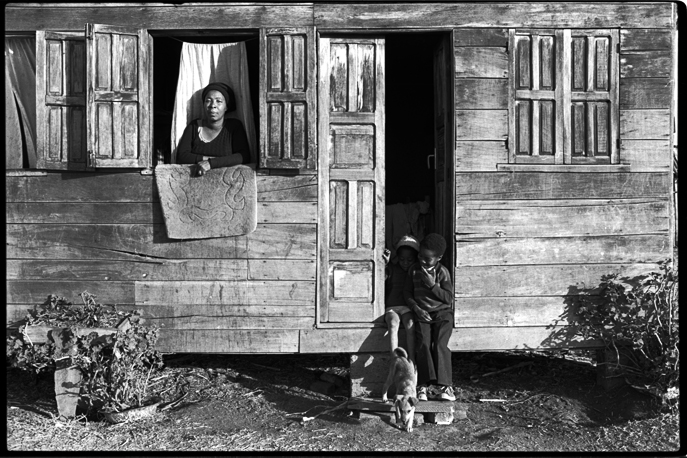
DURING my stay in Shashemene I met many remarkable people, none more so than Inez Baugh who told me: “I came here on February 8, 1968 with two daughters and my husband and two months later Haile Selassie came to visit the farm. I have been here 13 years. It’s nice here if you’re a millionaire but for someone who is poor it’s very hard. Sometimes I get very blues. To be a pioneer is very dread.”
Read more
by Derek Bishton | 26th January 2020 | January
29 January 1817
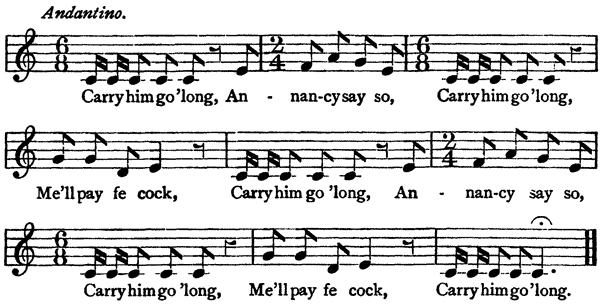
IN HIS Journal of a West Indian Proprietor Lewis recounts a notorious incident from 1788 when the owner of an adjacent estate ordered that a dying slave be carried to a gulley and left to die. The story became the subject of a popular song, Carry Him Along.
Read more

by Derek Bishton | 24th January 2020 | June
07 June 1692
FOLLOWING the capture of Jamaica from the Spanish in May, 1655, the English forces left to guard the island began building a fort to control access to Kingston harbour and a small community, known as The Point, grew up around it. After the overthrow of Cromwell and the Restoration of the Monarchy in 1660, the Point was renamed Port Royal and almost overnight it became the haven of choice for pirates and privateers from all over the world when Governor Doyley invited the Brethren of the Coast – a syndicate of pirates made famous in recent times by the Pirates of the Caribbean movies – to make it their home port.
Read more

by Derek Bishton | 23rd January 2020 | May
01 May 2018
ANTIGUA and Barbuda Prime Minister Gaston Browne apologised to members of the Rastafari community on May 1, 2018 for decades of oppression and marginalisation in an open letter which he subsequently delivered in parliament.
Read more
by Derek Bishton | 22nd January 2020 | April
20 April 1968
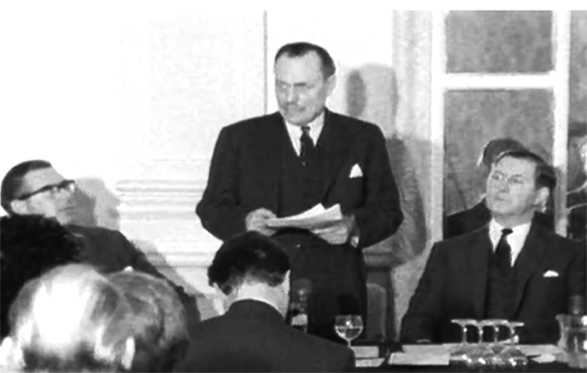
THIS is the full text of Enoch Powell’s speech delivered to a Conservative Association meeting at the Midland Hotel (later known as The Burlington Hotel) in New Street, Birmingham on April 20, 1968. The speech, criticising Commonwealth immigration and anti-discrimination legislation, was made prior to the second reading of the Labour government’s Race Relations Bill 1968. While Powell did not consider himself a racist, The Economist claimed in an editorial on the 50th anniversary of the speech that his rhetoric had a “lasting and malign effect … on the way in which race and migration are discussed, or not discussed.”
Read more

by Derek Bishton | 22nd January 2020 | April
22 April 1978
THE ONE LOVE Peace Concert was an attempt to bring an end to the political civil war in Jamaica caused by rival gangs supporting the two major political parties – the JLP and the PNP. More than 35,000 people crowded into Kingston’s National Stadium to hear 16 of the country’s top reggae acts. The evening culminated in Bob Marley’s performance when he forced rival leaders Michael Manley and Edward Seaga to join hands. Although this act grabbed most of the headlines at the time, many people believe it was Peter Tosh who made the most memorable contribution to the evening.
Read more

by Derek Bishton | 7th January 2020 | February
05 February 1793
IN MY household, nothing speaks more powerfully to nostalgic memories of Jamaica than a freshly roasted breadfruit, its charred exterior peeled away to reveal the firm, sweet, yellow flesh. Eaten in segments doused in black pepper and melted butter, it is the food of the Gods. It’s almost as good the following day, refried, for breakfast. But breadfruit is not native to the Caribbean: like other exotic fruits which have become synonymous with Jamaica such as coconuts and mangos, they arrived as part of the imperial arms race around food security that accompanied the slave trade. When William Bligh, who survived one of the most infamous mutinies in British naval history on his first attempt to transport examples of this super food to the Caribbean, finally landed in Jamaica in 1793 on his second voyage from Tahiti with his cargo of breadfruit saplings, he was fulfilling a key role in the expansion of the British empire.
Read more

by Derek Bishton | 2nd January 2020 | January
05 January 1865
EDWARD BEAN UNDERHILL (1813-1901) was secretary of the Baptist Missionary Society from July 1849 until his death. He visited the Society’s centres in India, Ceylon and the Caribbean and wrote in great detail about his experiences. His The West Indies: their Social and Religious Condition was published in 1862, and the worsening economic conditions in Jamaica prompted him to write to the Colonial Secretary Edward Cardwell in January 1865. The letter, which catalogued the devastating effect of adverse weather and a complete reliance on sugar production, estimated that 340,000 Jamaicans were near starvation. The letter was widely circulated in Jamaica by Baptist missionaries and Governor Eyre blamed Underwood for causing the unrest that led to the Morant Bay Rebellion later the same year.
Read more
by Derek Bishton | 14th December 2019 | February
08 February 1816
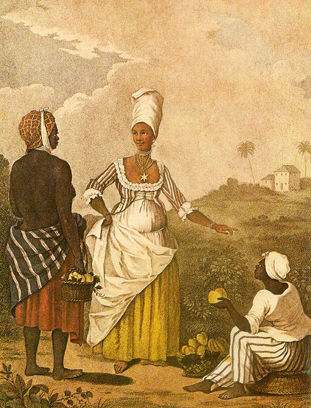
DURING an overnight stop in Rio Bueno en route to his estate in Cornwall, Lewis falls into conversation with his landlady – “a very pretty brown girl.” She tells Lewis she is the wife of an English merchant in Kingston who has provided her with a house. Lewis comments: “This kind of establishment is the highest object of the brown females of Jamaica; they seldom marry men of their own colour, but lay themselves out to captivate some white person who takes them for mistresses, under the appellation of housekeepers.” Lewis ends his dairy entry with a patronising jingle about these ambitions. His observations about mulatto women clearly reflect prevailing beliefs about the sexual appetites of women of colour and they also underline the way in which European prejudices based on race, colour and caste had become internalised at every level of Jamaican society.
Read more
by Derek Bishton | 6th December 2019 | December
07 December 1935
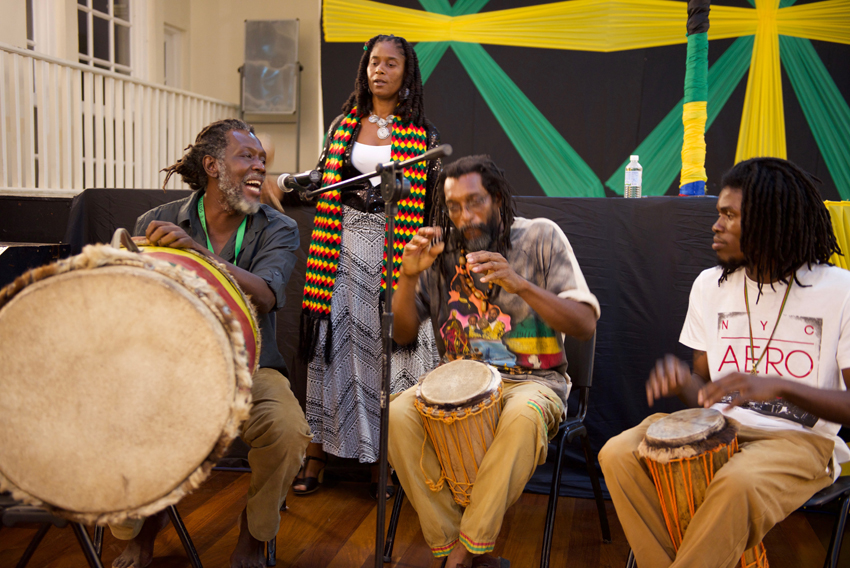
THE first recorded instance of the word ‘Nyabinghi’ (1) entering Jamaican cultural discourse that I can discover comes with the publication of an account of the Nya-Binghi Order in Ethiopia and the Congo in The Jamaica Times, published in December 1935, just a few months after Italy had invaded Ethiopia. The article is clearly a crude piece of Fascist propaganda written to legitimise Mussolini’s colonial ambitions in the Horn of Africa. Nevertheless, it was embraced by early Rasta leaders and given an alternative reading and interpretation which led directly to the formation of the Nyabinghi Order of Rastafari in Jamaica.
Read more

by Derek Bishton | 3rd October 2019 | April
21 April 1966
DAVID KATZ – author, DJ and reggae historian – describes the Ethiopian leader’s historic 1966 visit to Jamaica and the profound impact it had on the development of music on the island.
Read more
by Derek Bishton | 4th September 2019 | December
08 December 1977
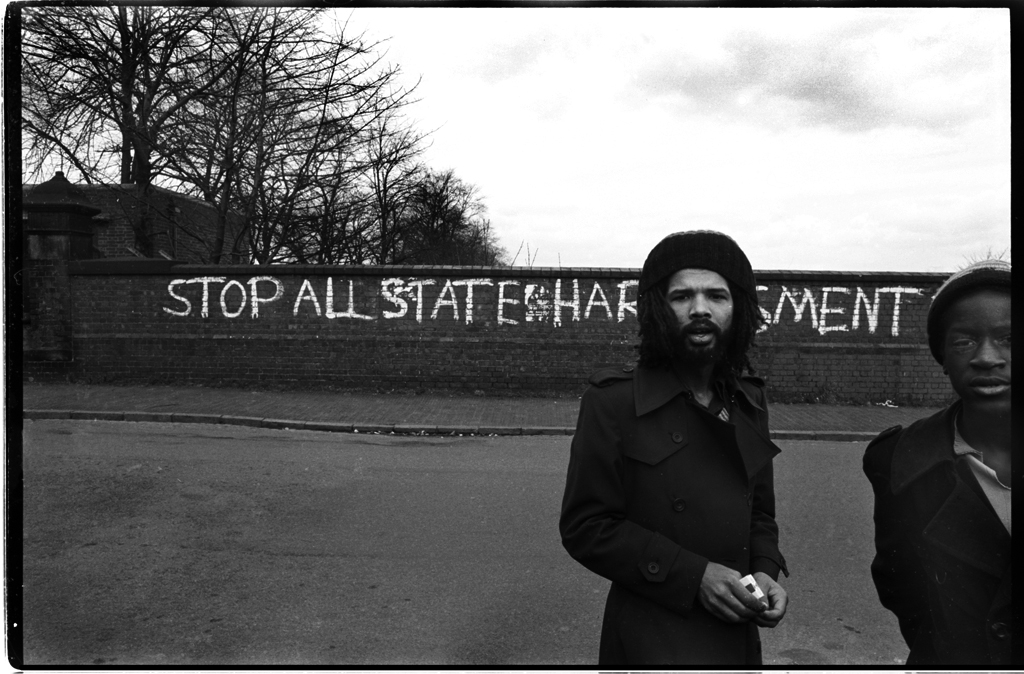
JOHN BROWN, a lecturer at the Cranfield Institute of Education was invited to study policing methods in Handsworth in the summer of 1977 following fears expressed by many community leaders that police were routinely using ancient laws enacted in the period of the Napoleonic wars to stop and search young black men for no other reason than that they were young and black. Many people feared that these tactics would lead eventually to violent retaliation.
Read more